
✦
Training
Build healthy habits and communicate more clearly.
The Nova Scotia Duck Tolling Retriever originated in Nova Scotia, Canada, where hunters used the dogs to attract waterfowl and retrieve birds after shooting. This sturdy breed has a medium-l…
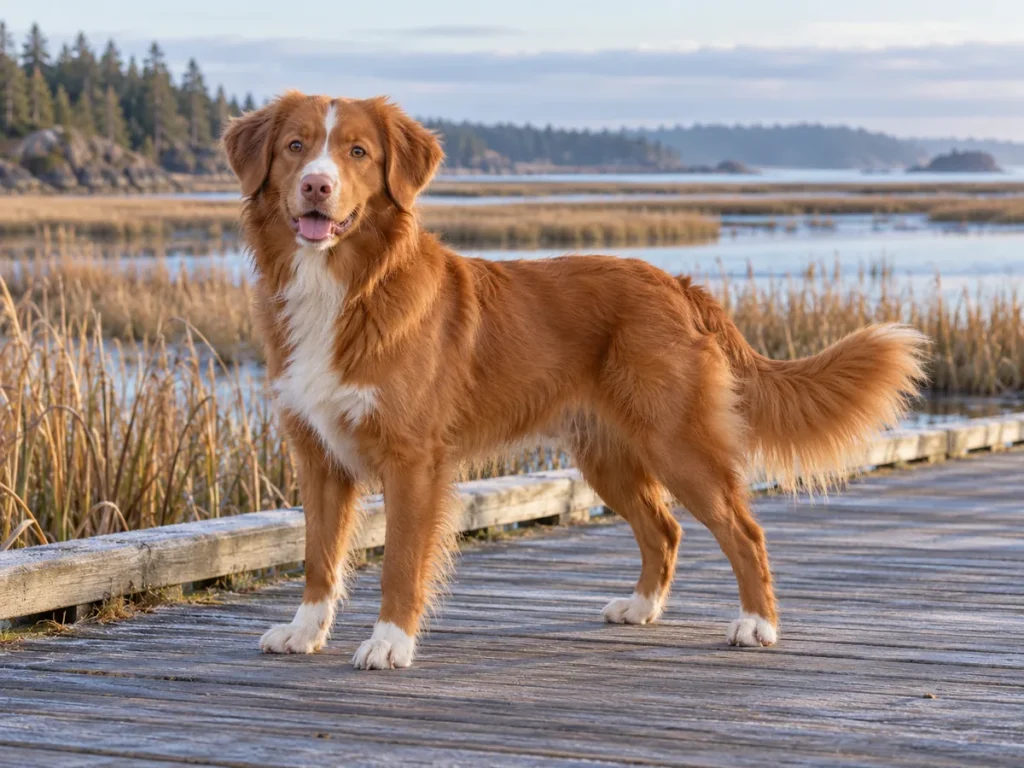
The Nova Scotia Duck Tolling Retriever originated in Nova Scotia, Canada, where hunters used the dogs to attract waterfowl and retrieve birds after shooting. This sturdy breed has a medium-length red or orange coat, drop ears and a well-feathered tail. White markings often appear on the chest, feet or tail tip. Intelligent and lively, Tollers enjoy joining in family activities but can be reserved with strangers. Daily outings and interaction are essential, with short, varied training sessions woven into everyday life. The double coat needs regular brushing, and seasonal shedding means more hair on clothes and furniture. Some dogs give loud, high-pitched calls when excited, so consider how family members and neighbours would cope with the noise.
Breed name: Nova Scotia Duck Tolling Retriever; commonly shortened to Toller. A medium-sized retriever, this dog can learn to retrieve game on land and in water.
In the early 19th century, hunters around Little River Harbour in Yarmouth County, Nova Scotia, developed dogs to lure and retrieve waterfowl. A hunter would hide near the shore and throw a ball or small stick for the dog. Running and playing at the water’s edge drew the birds closer. Once the birds came within range, the hunter recalled the dog to cover, fired and then sent the dog to retrieve the shot birds.
The breed was first known as the Little River Duck Dog. The Canadian Kennel Club recognised it in 1945. Today, Tollers also live as family dogs and, with suitable training, can take part in agility, obedience and other dog sports.
Adult males stand about 48–51 cm at the shoulder and weigh around 20–23 kg. Adult females stand about 45–48 cm and weigh around 17–20 kg.
The Toller has a compact, muscular body, a slightly wedge-shaped head, triangular drop ears and eyes ranging from amber to brown. Longer hair gives the tail a full, feathered appearance.
The medium-length outer coat lies over a soft, dense undercoat, helping protect the dog from cold and wet conditions while working in water. Coat colours range through shades of red and orange, often with white markings on the chest, feet, tail tip or a blaze running towards the nose.
Tollers are intelligent, affectionate and playful, showing warmth towards familiar family members. With new people or in unfamiliar surroundings, some prefer to watch before gradually approaching.
They have plenty of energy and a strong interest in retrieving. Mix toy-retrieval games with walks, sniffing time and brief training exercises. Owners who are interested can also train their dogs for agility, obedience or similar activities.
Lifespan is about 12–14 years, with individual differences influenced by genetics, health and everyday care. Conditions to discuss include hip and elbow dysplasia, progressive retinal atrophy and Addison’s disease. Joint problems can cause pain or lameness, while progressive retinal atrophy gradually damages vision.
Addison’s disease, also called hypoadrenocorticism, involves insufficient hormone production by the adrenal glands. Affected dogs may have recurring weakness, reduced appetite, vomiting or diarrhoea. These signs can have other causes, so a veterinarian needs to investigate them.
Plan for daily outings and interaction, along with ongoing training. Households whose members are often away for long periods need someone to provide care. In an apartment, consider whether excited calls could disturb neighbours.
The double coat sheds seasonally, bringing extra brushing and household cleaning. If swimming is part of family life, allow time afterwards for rinsing, drying and checking the ears.
Children and other animals need careful introductions and supervision. Rabbits, birds and other small pets should have secure areas separate from the dog to reduce the risk of fright or injury from chasing.
Tollers like being involved in family activities. With enough exercise, play and company, they can also settle quietly beside their people. Some are cautious around unfamiliar people or places and need time to watch and become comfortable. Visitors do not need to rush into petting or picking them up.
They learn quickly but may lose interest in repetitive exercises. Food or play can reward coming when called, waiting or giving up a toy. Keep practice brief, then change the setting or increase difficulty as the dog learns. Family members should use consistent rules rather than allowing something one moment and scolding it the next.
When very excited or eager to join a game, some Tollers make a loud, high-pitched sound resembling a howl.
Gradual exposure to people, other dogs and varied surroundings during puppyhood helps with adjustment to family life. Some dogs can live with cats when introduced carefully from a young age, but chasing still needs monitoring. Adults should supervise children and dogs together and teach children to leave a dog alone while eating or resting.
Choose a complete, balanced dog food suited to the dog’s age and health. Adjust daily portions to weight, body condition and activity. An active dog can still be overfed.
Include training treats in the day’s food allowance and record weight regularly. If weight changes noticeably, ask a veterinarian to assess body condition and whether portions need adjusting. Keep fresh drinking water available. Follow veterinary advice when a medical condition requires dietary changes.
Provide daily walks, sniffing and games such as retrieving toys, adjusting duration and intensity to age and health. Even with a garden, outings offer new smells and places to explore. Use a lead on walks, and choose a securely fenced area for off-lead activity and retrieval practice to prevent chasing or wandering.
Supervise swimming throughout. Choose calm water with an easy exit and use a well-fitting dog life jacket. Introduce water gradually without pushing the dog in. Take breaks during swimming, and schedule outdoor exercise for cooler parts of hot days.
Brush once or twice a week under normal conditions to remove loose undercoat, paying particular attention behind the ears and other areas that tangle. Increase brushing during shedding periods and remove loose hair from clothes and furniture more often.
Bathe according to how dirty the coat is, then towel-dry or blow-dry it. After swimming, rinse off salt, pool water or dirt with fresh water, dry the body and check the ears. Ask a veterinarian to demonstrate safe ear cleaning. Odour, discharge, frequent head-shaking or scratching warrants a veterinary visit. Brush the teeth regularly and trim overgrown nails.
Arrange examinations, vaccinations and parasite prevention with a veterinarian. Watch for changes in gait, vision, appetite and activity. Persistent lameness, red or cloudy eyes and unusual eye discharge need prompt attention. Recurring vomiting, diarrhoea or low energy also needs investigation.
Sudden weakness, severe vomiting or collapse requires immediate veterinary help. Dogs diagnosed with Addison’s disease often need lifelong medication and follow-up tests, with treatment tailored to their results.
Ask the breeder about the health of the parents and close relatives. Review parental hip and eye reports, plus any heart or thyroid examination reports available, checking the dog’s identity, dates and results. Also review the puppy’s vaccination, parasite-control and veterinary examination records.
Progressive retinal atrophy includes several forms; the PRA-prcd genetic test addresses only one. A genetic test is also available for juvenile Addison’s disease. Ask a veterinarian to explain the results: one eye-disease test cannot rule out every inherited eye condition, and the juvenile Addison’s test cannot exclude other forms of Addison’s disease. Clinical examinations remain relevant alongside genetic testing.
At a meeting, look for natural movement, unusual eye discharge and obvious skin redness, hair loss or wounds. Notice how the dog interacts with its carer and companions. Lameness, persistent coughing, vomiting or diarrhoea should be assessed by a veterinarian first.
Some dogs are cautious with strangers at first. Allow time to become familiar, then see whether the dog chooses to approach. A meeting should be considered alongside veterinary findings and records of everyday behaviour.
Find out which people, animals and environments the puppy has encountered, and whether it is becoming comfortable with a lead, brushing and routine handling. When choosing an adult dog or adopting, ask the current carer about behaviour when left alone, excited calls and any history of chasing cats or other small animals.
If dogs or cats already live at home, introduce them gradually under supervision and watch for tension or chasing.
Agree who will handle walks, meals, training and grooming, and who will take over during busy periods or travel. Check that regular walks and a secure place for retrieval games are practical, and that everyone can accept shedding and possible high-pitched calls over the long term.
Supervise contact with young children or small animals. When supervision is unavailable, keep them in separate, secure areas. Include the daily time needed for outings, training and company when deciding whether the breed fits your home.
Alongside food, leads and toys, allow for coat care, vaccinations, parasite prevention, examinations and dental care. Dog walking or boarding may be needed when work schedules make care difficult.
Set aside an emergency fund and consider the cost of ongoing medication and repeat visits. A local veterinarian can outline routine care costs before you bring the dog home.

Affectionate · Medium · Moderate
Affectionate · Long · Medium


Affectionate · Playful · Quiet

Affectionate · Medium · Moderate

Affectionate · Curious · Long
Scan with a phone camera, QR scanner, or social app to open this page.
Scan with WeChat to open this page, then use WeChat to forward it.
Enter the Mastodon server where your account is hosted.
By continuing, you agree to our Terms and Privacy Policy.
By continuing, you agree to our Terms and Privacy Policy.