
✦
Training
Build healthy habits and communicate more clearly.
The American Bully is a compact, heavily built companion dog with a broad head, a deep chest and a short, glossy coat. It was bred in the United States to be a steady family dog, and it keep…
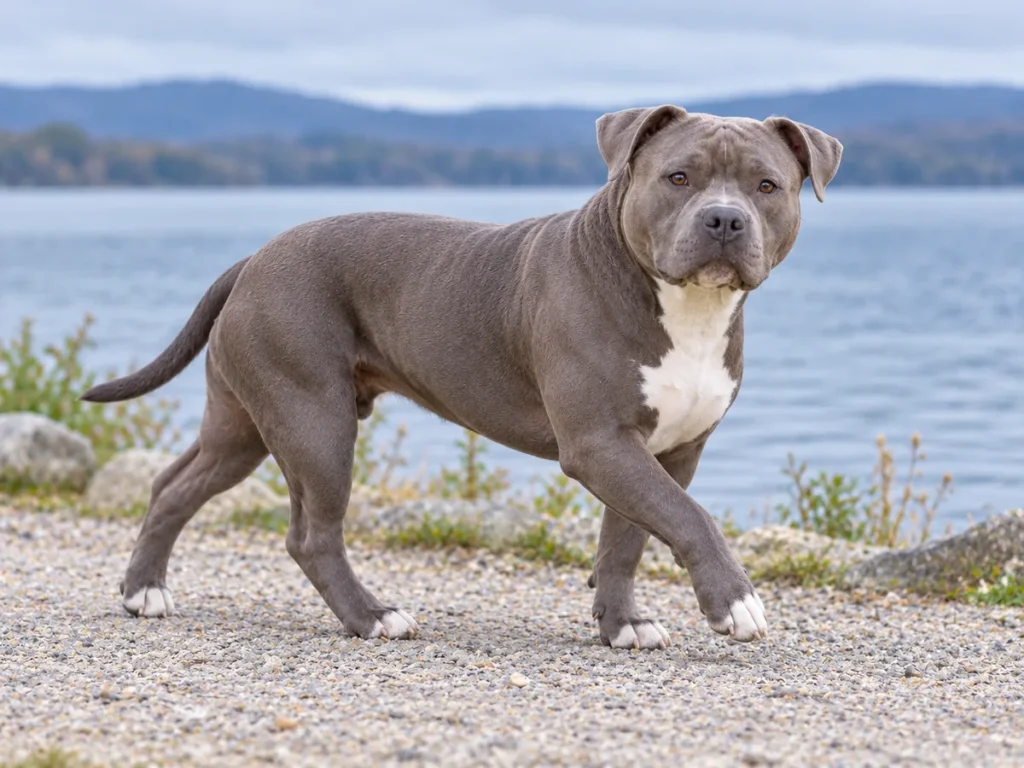
The American Bully is a compact, heavily built companion dog with a broad head, a deep chest and a short, glossy coat. It was bred in the United States to be a steady family dog, and it keeps the substance and confidence of its bull-and-terrier ancestors while being rather less driven to work or fight. Despite the frequent comparisons, it is neither an American Pit Bull Terrier nor an American Staffordshire Terrier: it has its own standard, its own registries and a different breed history.
The name is often misunderstood. “Bully” here belongs to the bull-and-terrier tradition; it is not a description of temperament. The American Bully Kennel Club (ABKC) set out the breed standard in 2004. The United Kennel Club (UKC) recognised it on 15 July 2013 and registers it in its Companion Dog Group. The American Kennel Club (AKC) and the Fédération Cynologique Internationale (FCI) do not currently recognise the American Bully as a separate breed, so there is no AKC or FCI standard for it.
The American Bully took shape in the United States in the 1980s and was largely settled by the 1990s. Breeders began with the American Pit Bull Terrier and brought in the American Bulldog, the English Bulldog and the Olde English Bulldogge. They wanted a dog with the build, confidence and athleticism of the bull breeds, but a more companionable outlook and less inclination to fight other dogs. Some early dogs were registered as American Pit Bull Terriers; as their type drifted further from that breed, the American Bully was established in its own right. The ABKC gave breeders a shared standard and a pedigree registry, and UKC recognition brought the breed wider attention.
The ABKC recognises four varieties: Standard, Classic, Pocket and XL. The UKC treats Standard and Classic as one height group and lists Pocket, Standard/Classic and XL. Adult height at the withers is roughly:
Overall, adults stand about 13–22.5 in (33–57 cm) at the withers. The breed has no fixed weight. Adults commonly fall somewhere between 44 and 132 lb (20–60 kg), but build, muscle and body condition make a big difference, and a dog at the top of that range is not automatically healthier or a better choice.
The head is the breed’s signature: large, broad and square from the front and the side, with strong cheek muscles and a muzzle shorter than the skull. The body is close-coupled and square, with a deep chest, well-sprung ribs, a level back and heavy bone. The tail is set low and tapers to a point; it may lift when the dog is excited, but it should not curl over the back. The coat is short, smooth, close and slightly stiff to the touch, no longer than about 0.5 in (1.3 cm). This is not a long-coated breed. Black, white, blue, grey, red, brown, brindle and tricolour all occur. Merle is treated differently by different registries: UKC disqualifies it, while ABKC accepts it. Merle has also been linked to hearing and eye problems, so it should not be the deciding factor when choosing a puppy.
Most sources give a lifespan of 10–13 years, with some suggesting a longer range; weight, breeding and veterinary care all affect how long an individual dog lives. The main health concerns are hip and elbow dysplasia, allergic skin disease, recurrent ear infections, skin-fold dermatitis, obesity, cruciate ligament injury and breathing problems in dogs with very short muzzles. Heart problems have been reported in some lines. Merle dogs need particular attention to pigment-related hearing and vision issues. These are risks, not predictions: plenty of American Bullies never develop them. Even so, health screening and weight control are not optional extras.
England and Wales have restricted XL Bullies since 2024. Owners need a Certificate of Exemption, and the dog must be neutered, microchipped, kept on a lead and muzzled in public. Selling, breeding or transferring an XL Bully is illegal. In China, some cities, including Changde and Jiaxing, list the American Bully among prohibited breeds. Local rules change, so check the current position before you commit. Landlords, homeowners’ associations and individual rental agreements may also impose restrictions.
American Bullies are usually happiest in the middle of family life. They tend to follow their people from room to room, join in whatever is going on and settle close by when the house slows down. That sociability is one of the breed’s strongest points, but it is not the same as being able to cope with long stretches alone. A dog that has never practised being alone may bark, chew or become anxious when left; short absences, built up gradually, are easier than a sudden long day.
The breed’s confidence and strength arrive together. A young Bully that jumps up, bolts through an open door or pulls hard on the lead is not simply being boisterous. At 45 lb (20 kg) or more, it can knock someone over. Lead manners, a reliable recall, waiting at doors and a solid “drop it” are worth teaching from puppyhood and practising for life.
Attitudes to other dogs vary considerably. Some American Bullies live peacefully with other dogs; others are selective, particularly with unfamiliar dogs of the same sex, or guard food and toys. Early, positive socialisation helps, but it does not override an individual dog’s temperament. Do not assume that a Bully will be a dog-park regular just because the standard calls the breed friendly. Introduce new dogs carefully, watch body language and separate dogs at feeding time.
With children, the standard asks for a friendly, steady dog, but size and strength still call for adult supervision. Children should not ride on the dog, hug it tightly, pull its ears or approach it while it is eating. Families with very young children, several pets or little time for training should think carefully before taking on a breed this powerful.
American Bullies do best with routine and clear, fair rules. Reward-based training, short sessions and consistent daily habits work better than shouting or physical corrections. Harsh handling tends to make a strong dog more anxious, not more obedient.
Feed a complete, balanced diet suited to the dog’s life stage, and adjust the amount to weight, body condition and activity. American Bullies are muscular and often food-motivated, which makes overfeeding easy. A broad chest can hide extra fat, so weigh the dog regularly and learn to assess body condition by feel as well as by sight. Treats count towards the day’s calories; use part of the normal ration for training.
Puppies should grow steadily rather than as fast as possible. If the adult is expected to be large, ask your veterinarian about a large-breed puppy food. Do not add calcium or other supplements unless a veterinarian recommends them for this particular dog. Adult dogs usually do well on one or two meals a day; puppies need smaller, more frequent meals. Change foods gradually over several days and watch the dog’s stool and skin.
Most healthy adult American Bullies do well with about 30–60 minutes of activity a day, split into two walks plus sniffing, short training and controlled play. They are not endurance athletes, but they should not be left to lounge all day either. Low-impact exercise builds muscle and keeps joints moving; avoid repeated hard running or jumping while a puppy is still growing. In hot weather, walk early or late, carry water and stop at the first sign of heavy panting, drooling, wobbling or dullness. Dogs with very short muzzles or heavy chests are at particular risk.
An apartment is fine if the dog gets out every day. Inside, provide non-slip flooring, a quiet place to rest and enough room to stretch out. Outside, use a secure fence and a lead; never rely on recall in an unfenced area. In hallways, lifts and crowded streets, shorten the lead and keep the dog close.
Brush once or twice a week, more often when the coat is shedding, to remove loose hair and check the skin. Bathe as needed with a dog-specific shampoo; rinse and dry thoroughly, especially around the chest, belly and any skin folds. Dogs with sensitive or oily skin do not need frequent harsh shampoos.
Check the ears weekly for odour, discharge or redness, and clean them gently when needed. Keep skin folds dry and clean. Trim nails as needed, and brush the teeth daily if possible, or follow a veterinary dental plan. The coat is easy; the skin and ears are the parts that need routine attention.
Puppies need their vaccination and deworming schedule and a baseline check. Adults should have at least an annual examination, with attention to weight, skin, ears, gait and breathing. Before buying or adopting, ask about the parents’ hip and elbow screening, heart checks, skin history and breathing; registration papers are not a health test.
See a veterinarian promptly for persistent itching, repeated ear infections, red or hairless patches, lameness, coughing after exercise or noisy breathing. Dogs with short muzzles, loud snoring or poor exercise tolerance deserve a careful airway assessment before anaesthesia or heat exposure. Keeping the dog lean is one of the most effective things you can do for its joints, breathing and surgical risk.
Start with the type, not the look. Pocket, Standard, Classic and XL differ in height, mass and the amount of dog you will need to handle. A smaller dog is not automatically easier, and a larger dog is not automatically more impressive. Think about your strength, your home, your local rules and how much dog you can walk and train safely.
Buy from a source that can show you the parents, the living conditions and the records. ABKC or UKC registration documents a pedigree; it does not prove health. Ask for hip and elbow screening, cardiac checks, skin and breathing history, and the breeder’s reasons for the pairing. A breeder who talks about temperament, structure and health is more useful than one who leads with size, colour or a bloodline name.
When choosing a puppy, watch it move and breathe. A healthy puppy breathes quietly, has clear eyes, clean skin, a steady gait and a lean body. Be cautious with a puppy whose muzzle is so short that it snorts or struggles to breathe, whose front legs are markedly bowed, whose back is roached or who is much heavier than its littermates. The coat should be short and smooth, with no widespread folds or odour.
Adult American Bullies are worth considering. Ask how the dog walks on a lead, behaves with other dogs, handles being alone and reacts to strangers and handling. A quiet meeting will tell you more than a photograph. An adult’s temperament is already visible, which can make matching easier.
Finally, check the practical and legal side. Is the breed allowed where you live? Does your landlord or homeowners’ association permit it? Can you cover routine care and unexpected skin, joint or emergency costs? In England and Wales, XL Bullies are heavily restricted; in China, some cities, including Changde and Jiaxing, prohibit the breed. Rules change, so confirm with local authorities before you buy. Price, colour and pedigree are poor substitutes for those checks.

Affectionate · Medium · Moderate
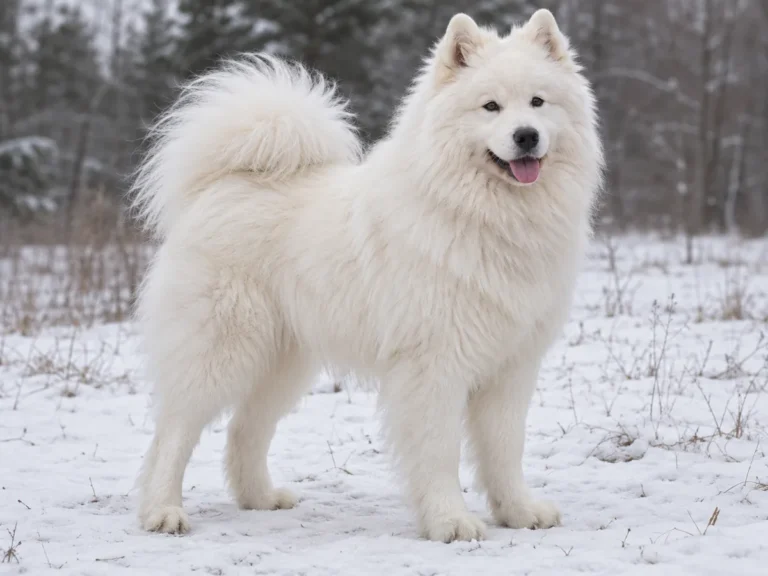
Affectionate · Long · Medium
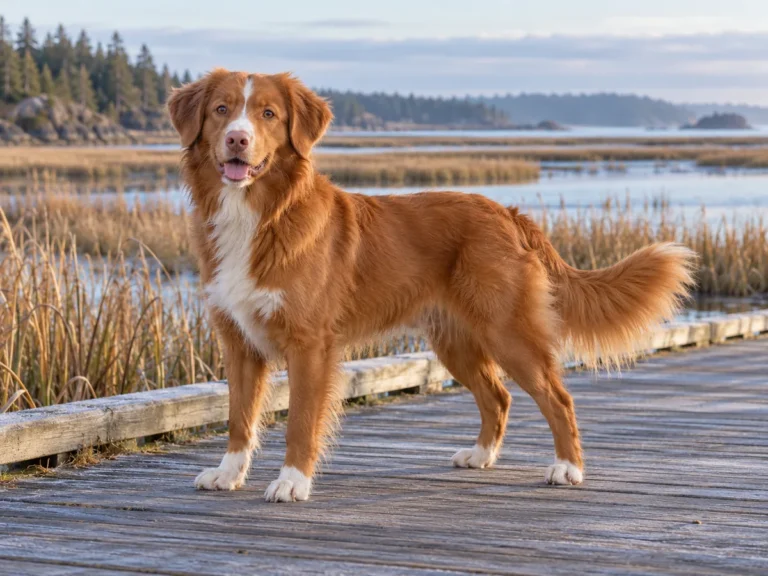
Affectionate · Medium · Playful

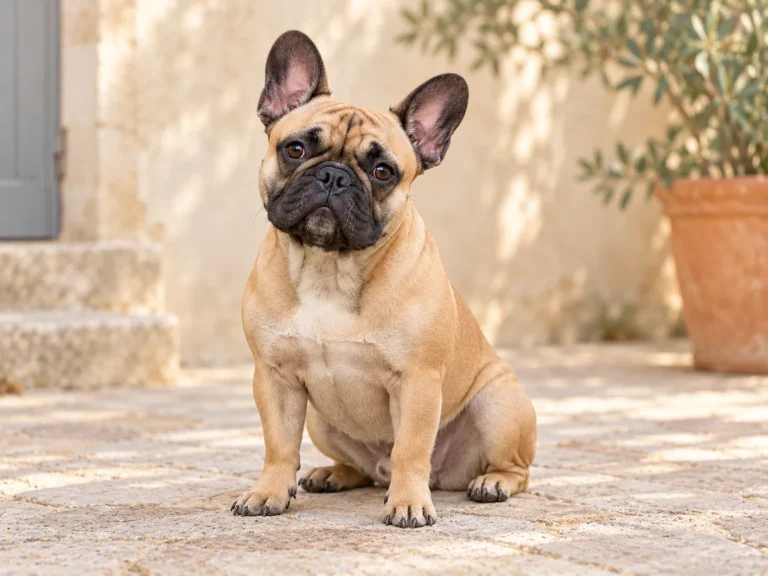
Affectionate · Playful · Quiet

Affectionate · Curious · Long
Scan with a phone camera, QR scanner, or social app to open this page.
Scan with WeChat to open this page, then use WeChat to forward it.
Enter the Mastodon server where your account is hosted.
By continuing, you agree to our Terms and Privacy Policy.
By continuing, you agree to our Terms and Privacy Policy.